
The benefits of swimming
Five reasons to swim with your child
1. Enjoyment
The relationship between a child and their parents is strengthened and one learns not only to swim but also to listen to each other's signals and mutual respect. Our warm water provides the optimal conditions for learning to swim. The environment is calm and the instructor has great knowledge of children and swimming development. We have developed a playful pedagogy that makes learning to swim enjoyable.

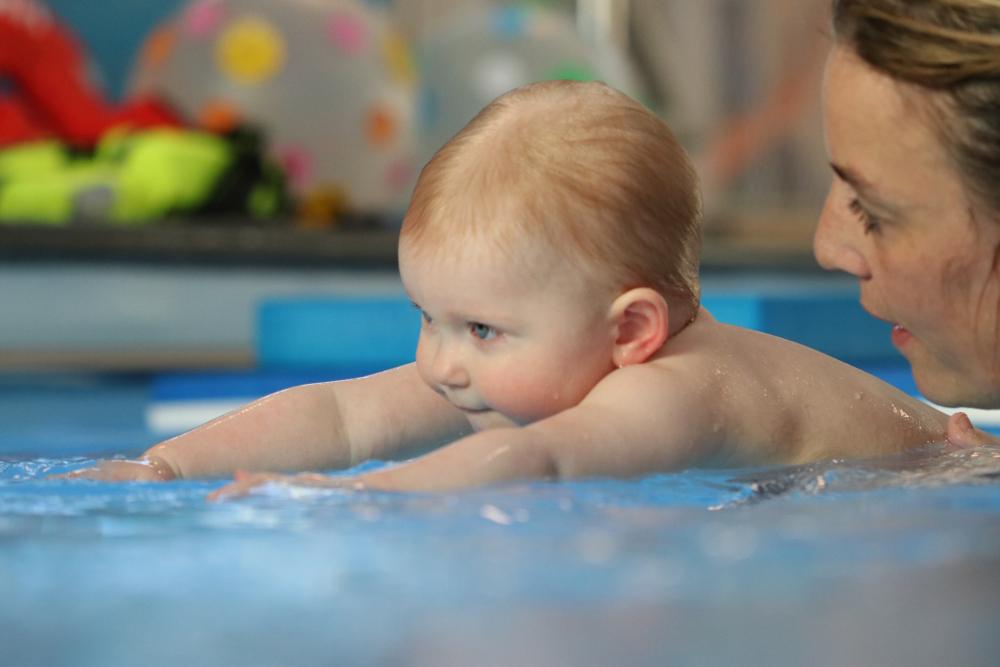
2. Development
Water as an element provides both a resistance and a lifting force. With these characteristics, water enables a child to move in a way that they cannot do on land. Through the water, different muscles are trained so that the child eventually can do the movements on land. Learning swimming skills gives the child a confidence that extends beyond the pool. The independence that even really young children get in the water gives the child joy and inspiration to dare other things as well. Socially, the child develops by being in a group with other children.
3. Water safety
Water is wonderful and provides so many opportunities to develop, but water is also potentially life-threatening. You can drown in water and that is why it is so important to learn to both find the fantastic opportunities and to learn respect for water. We teach water safety skills so that the child can learn how to save themselves in the potential event of an accident. There are many stories about how children who have attended our swimming school cope perfectly with situations where other children would have panicked.
4. Excercise
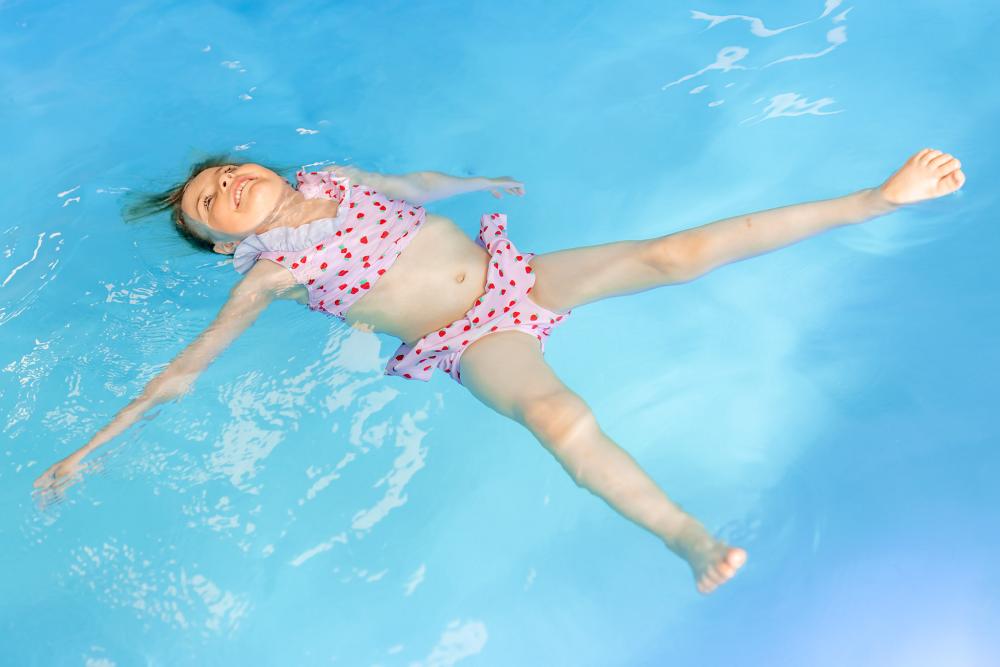
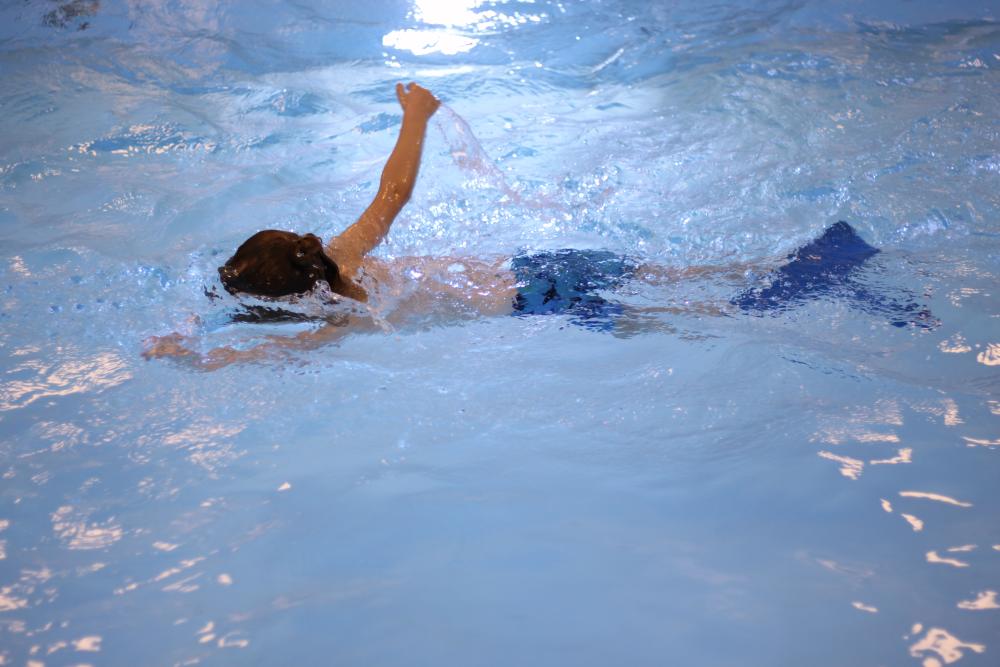
Learning to swim at a young age establishes healthy exercise habits early. In our sedentary society, it is important to find ways to release the physical energy that children have. Far away from screens, the child trains fitness and strength in our fine facility.
5. School requirements
To get a passing grade in Physical Education (Idrott och hälsa), you must be able to swim. The requirement is that a child in year 6 must be able to swim 200 m, in the swimming style of their choice, of which 50 m has to be backstroke. It is good to start swimming lessons early so that your child is well prepared.
Does a student have to be able to swim to get a passing grade in the subject of Physical Education and Health in year 6?
Yes, that is correct.
How well must a student be able to swim to achieve a passing grade?
In order to get a passing grade in Physical Education and Health in year 6, i.e. minimum passing grade E, a student must:
- be able to swim 200 meters in a row of which 50 meters backstroke
- handle emergencies on land and in water
The same requirements apply for a passing grade in year 9.
Source: Swedish National Agency for Education (Skolverket)